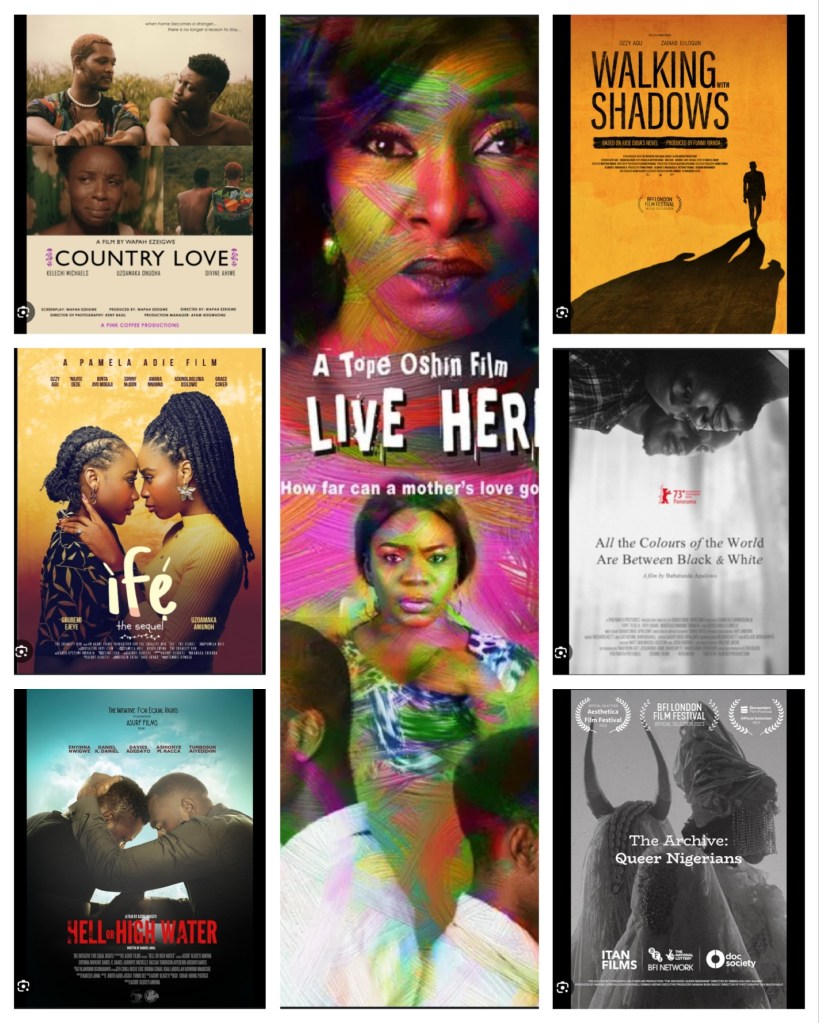
For decades, Nollywood has portrayed LGBTQ+ characters through a lens of prejudice, often casting them as villains or subjects of “conversion therapy.” When not depicted as sinister, they are reduced to comic relief, caricatured through exaggerated roles and humiliating storylines. These harmful portrayals reinforce negative stereotypes and deepen societal bias against Nigeria’s LGBTQ+ community.
Fortunately, a new generation of queer Nigerian filmmakers is challenging these narratives, creating films that offer nuanced, authentic representations of LGBTQ+ lives. Their work is reshaping public discourse and sparking vital conversations. Here are some standout films leading this transformation:
All the Colors of the World are Between Black and White (2023)
This queer romcom, directed by Babatunde Apalawo, follows Bambino and Bawa, whose friendship blossoms into something deeper after they meet at a photography competition. Against the backdrop of a homophobic society, they navigate their feelings with resilience and tenderness. Featuring Tope Tedela and Riyo David, the film is a heartfelt exploration of love and identity.
Country Love (2022)
Wapah Ezeigwe’s directorial debut, Country Love, follows a femme queer man who, after enduring familial homophobia, leaves home for 15 years. Upon his return, he finds that nothing has changed. Set in a rural Nigerian community, this poignant film explores the complexities of same-sex love in a deeply traditional society. With lush cinematography and heartfelt performances, it delivers a story of quiet rebellion and resilience.
The Archive: Queer Nigerians (2023)
Simisolaoluwa Akande’s short film The Archive: Queer Nigerians brings together LGBTQ+ Nigerians in the UK to share and document their personal stories, shedding light on their experiences and the erasure of queer history from Nigeria’s national narrative.
Walking with Shadows (2019)
Directed by Aoife O’Kelly, Walking with Shadows follows Adrian, who is outed by a spiteful colleague and forced to confront his sexuality. The revelation leads to a painful fallout with his wife, who demands he leave. Seeking solace, Adrian moves in with a gay friend and embarks on a tender romance with Antoine, a French expatriate. The film’s subtle storytelling captures the weight of secrecy and the longing for acceptance.
Ife (2020)
Produced by LGBTQ+ advocates Pamela Adie and Uyaiedu Ikpe-Etim, Ife tells the story of Ife and Adaora, whose one-night date unfolds into three unforgettable days. As their connection deepens, the film underscores the universality of love against the backdrop of Nigeria’s deeply entrenched homophobia.
We Don’t Live Here Anymore (2018)
We Don’t Live Here Anymore tells the story of Tolu and Chidi, two teenage boys navigating love and judgment at Prominence High. When Tolu’s relationship puts him at risk of expulsion, his mother fights to protect the family’s reputation. Despite Nigeria’s restrictive laws, the film premiered at Lagos’ IMAX Cinemas in 2018, marking a bold step forward in queer storytelling.
Hell or High Water (2016)
One of Nigeria’s earliest positive portrayals of same-sex relationships, Oluseyi “Asurf” Amuwa’s Hell or High Water offers an unflinching look at how Nigerian families, steeped in religious conservatism, perceive homosexuality. The film follows Pastor Gbolahan’s journey of self-discovery while examining the struggles of women trapped in loveless marriages with closeted men. Released in the wake of Nigeria’s 2014 Same-Sex Marriage Prohibition Act, this short film boldly confronts homophobia, faith, love, and identity.
These films do more than challenge stereotypes—they carve out space for queer voices in a cultural landscape that has long silenced them. By blending artistry with activism, they illuminate the quiet beauty of everyday lives and the universal longing for love, acceptance, and the freedom to simply be.
 The Kolanut Collective
Leave a comment