Lotanna Omasiri
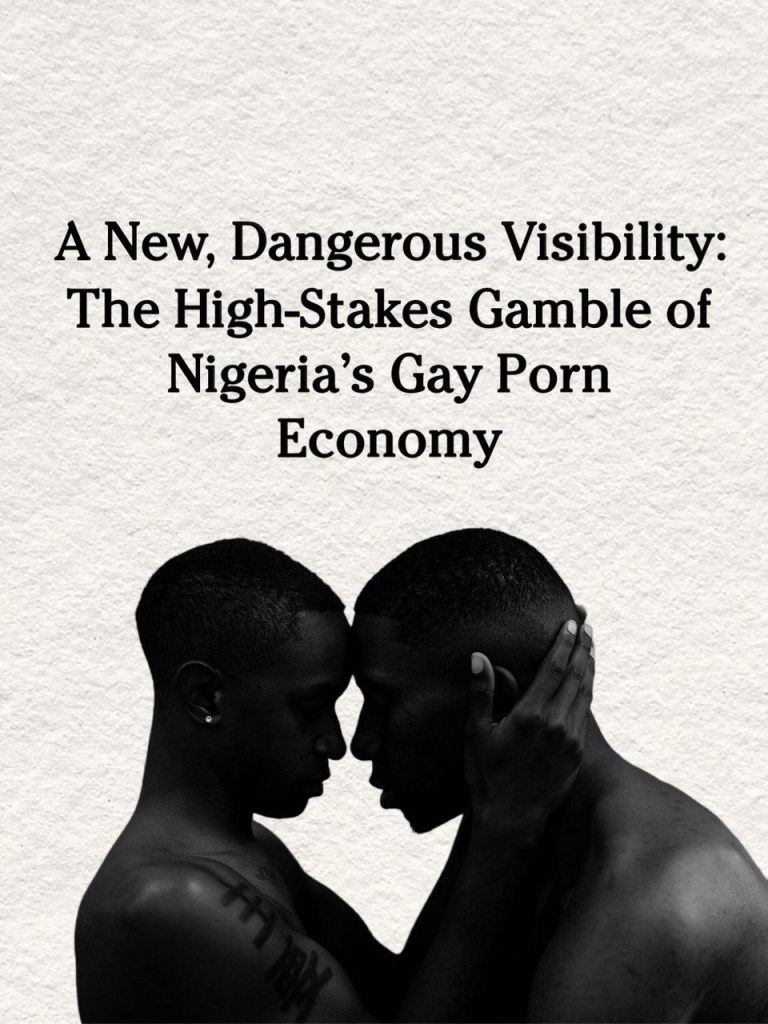
Driven by the siren call of platforms like OnlyFans and X (formerly Twitter), and fueled by economic desperation, a generation of young Nigerian gay men is turning to sex work and amateur porn production as a means of survival, attention, and fleeting career potential. Bolu Okupe, the son of a late, prominent Nigerian political figure, is one of the most visible figures in this digital migration. He leverages his own notoriety to build a following on platforms like OnlyFans, presenting a stark personal refutation of his family’s and country’s staunch conservatism.
This new visibility, however, is a double-edged sword carved from desperation for many.
For years, the country’s draconian anti-LGBTQ+ laws, which carry penalties up to 14 years in prison and, in some Northern states, the death penalty, have been difficult to wield against consensual, private activity. Prosecutions have often relied on vague accusations and flimsy evidence, maintaining a climate of fear without an overwhelming volume of convictions.
But a new, digitally visible economy is changing that, dramatically and dangerously. The Nigerian government has found its newest weapon in the long, brutal campaign against its own queer citizens: conclusive video evidence.
In the nascent days of this industry, fear was palpable. The content reflected this precarity: clips were short, poorly produced, and identities were concealed behind masks—a practice that, even in Western countries, remains a necessary layer of protection for many performers. The risks associated with this visibility are brutally tangible. The chilling experience of watching widely circulated, brutal footage of a young Nigerian gay porn actor being violently attacked and brutalized serves as a stark and horrific warning of the potential offline consequences.
Yet, today, there’s a new brazenness. The archives of online platforms are filling with content featuring Nigerian actors whose faces are fully visible. The aesthetics are slowly improving, evolving from bare-bones clips to content produced in better apartments, suggesting the emergence of local production companies and “porn identities.” This is a tragic sign of progress in the face of immense risk, demonstrating an undeniable demand for Black, queer African intimacy.
But this new economy is a humanitarian crisis wrapped in a digital facade.
The production of this content offers a perfect, gift-wrapped opportunity for a state eager to score cheap political points with a deeply conservative populace. For a government that once struggled for legal proof of “same-sex amorous relationships” or “gross indecency,” the public archive of gay porn is a prosecutor’s dream.
The evidence is now online, indelible, and a moralistic government can wield it with devastating effect, transforming a desperate attempt at economic agency into a life sentence. Recent, varying reports of police going door-to-door to round up individuals associated with this industry suggest the official crackdown is already underway, morphing from sporadic arrests into a targeted, government-driven clampdown.
Compounding this danger are the critical ethical, health, and labor questions hovering over this burgeoning digital trade:
- Exploitation and Consent: It is entirely unclear whether actors, many of whom are already marginalized and economically vulnerable, are operating under any form of contract, or if they are in a position to recognize, let alone legally contest, exploitation. The scenes themselves, sometimes resembling uncontrolled orgies, raise urgent concerns about consent, the use of drugs, and fundamental safety.
- Health and Safety: In a country where anti-LGBTQ+ laws actively impede HIV prevention and care services out of fear of state detection, the production of explicit content, often without clear sexual health measures, is an acute public health danger. The industry’s low-budget, unregulated nature leaves actors exposed.
- Child Safety: The non-existent age verification process is a terrifying liability. Amidst videos featuring “scrawny” actors, the risk of minors appearing in content is unacceptably high and has the potential to trigger international legal action against both producers and the platforms hosting the content.
- The Foreign Gaze: The recent collaboration with prominent American gay porn actors, who fly in, plaster the internet with their content, and then safely return home, highlights a neo-colonial dynamic of exploitation. It begs the question of what contracts, if any, are negotiated to protect the Nigerian actors who remain behind, stripped of their privacy and facing legal jeopardy.
The Nigerian LGBTQ+ non-profit ecosystem, already running on meager international funding that is increasingly strained and often pivoting to focus on issues of direct physical harm, is ill-equipped for this new, sophisticated legal and social emergency. The small budgets of these NGOs are dwarfed by the legal and mental health needs of actors facing potential incarceration and profound trauma.
Furthermore, with global attention shifting to other areas and a new American administration fixated on higher-profile anti-Christian persecution or other immediate human rights violations, mobilizing international political and financial support for a group engaged in a heavily stigmatized activity like porn production will be a steep, uphill climb.
What is happening in Nigeria’s queer digital economy is not a simple story of liberation or entrepreneurship. It is the complex, heartbreaking intersection of economic crisis, digital opportunity, and state-sanctioned homophobia. These young men are trading the theoretical anonymity of Nigeria’s queer underground for a perilous, documented visibility, gambling their freedom for a few months’ rent. The international community, digital content platforms, and human rights bodies must not look away. The videos these men are making are not just pornography; they are now warrants for arrest, and the world must act before a digital gold rush turns into a mass incarceration crisis.
NOTE: The views and opinions expressed in our blog section are those of the author(s) and do not necessarily reflect the views of The Kolanut Collective or its leadership.
 The Kolanut Collective
Leave a comment